Physical Address
304 North Cardinal St.
Dorchester Center, MA 02124
Physical Address
304 North Cardinal St.
Dorchester Center, MA 02124

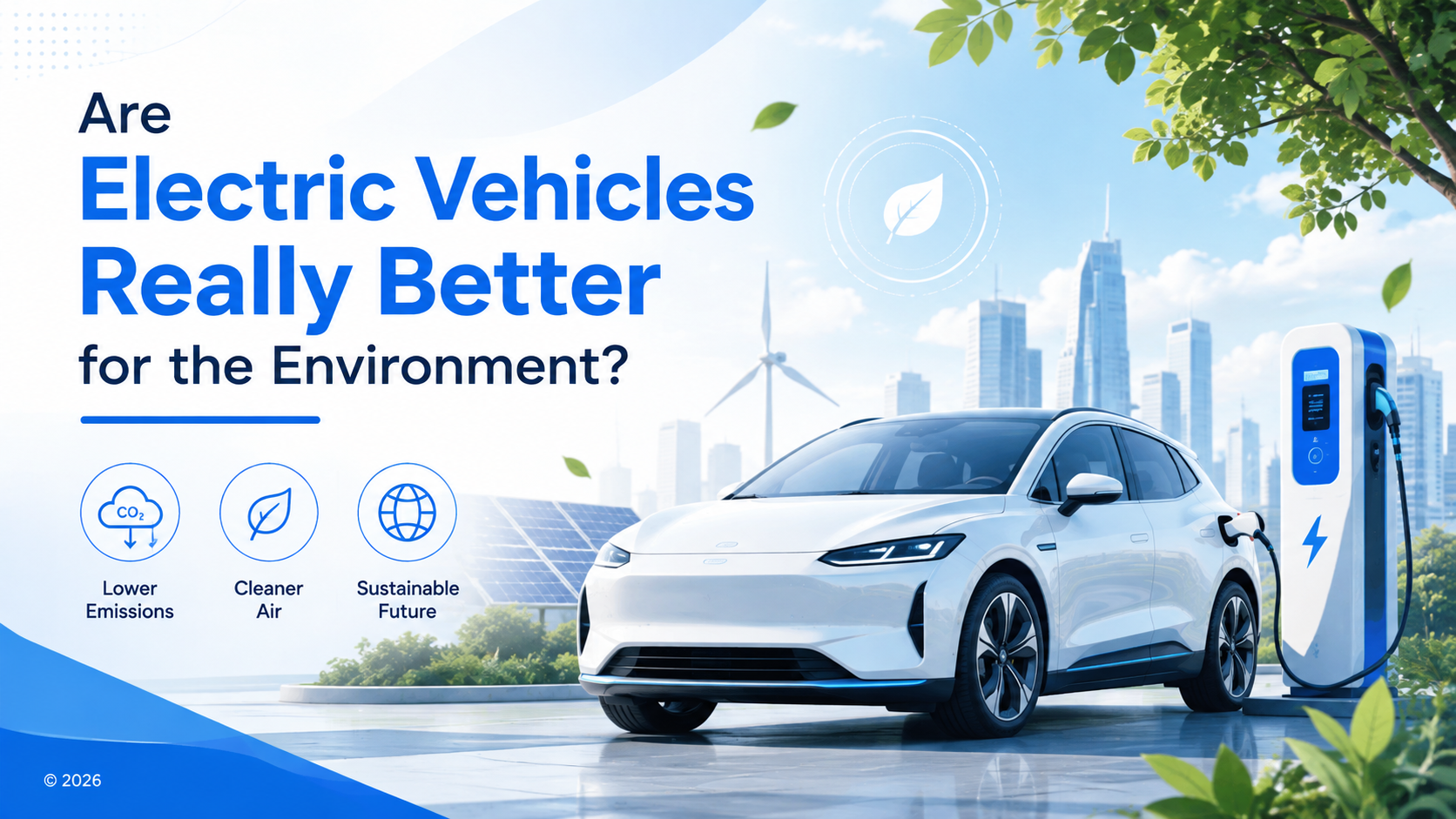
Electric vehicles are often presented as an important solution for reducing pollution and fighting climate change. Unlike gasoline and diesel cars, they do not release exhaust fumes while driving. However, producing EV batteries requires energy, mining, and raw materials, which raises an important question: Are electric vehicles better for the environment?
The simple answer is yes—in most situations, electric vehicles are environmentally better than traditional gasoline or diesel vehicles over their complete lifetime. However, EVs are not completely pollution-free.
Their total environmental impact depends on several factors, including battery production, vehicle size, electricity sources, driving distance, battery recycling, and how long the vehicle remains in use.
Looking only at emissions from the exhaust pipe does not provide a complete comparison. To understand whether electric vehicles are better for the environment, we must examine their entire life cycle.
A vehicle’s environmental impact generally includes:
This approach is known as a life-cycle assessment.
According to the International Energy Agency, the life-cycle emissions of a medium-sized battery electric car are approximately half those of an equivalent internal-combustion vehicle when measured using the global average.
Manufacturing an electric vehicle can initially produce more emissions than manufacturing a gasoline car. The main reason is the production of its large lithium-ion battery.
Producing an EV battery involves:
These activities require energy and can affect land, water resources, local ecosystems, and nearby communities.
Therefore, an electric vehicle may begin its life with a larger manufacturing carbon footprint than a similar gasoline-powered vehicle. However, this does not mean that the gasoline vehicle is cleaner overall.
Once both vehicles begin operating, the electric vehicle usually produces fewer emissions. Over thousands of kilometres, these operational savings generally compensate for the additional emissions created during battery production. The EPA confirms that EV life-cycle greenhouse gas emissions are typically lower even after vehicle and battery manufacturing are included.
Battery electric vehicles produce zero direct tailpipe emissions. They do not have an exhaust pipe releasing carbon dioxide, nitrogen oxides, carbon monoxide, or other combustion-related pollutants while driving.
However, calling an EV completely “zero-emission” can be misleading.
Indirect emissions may still come from:
Therefore, a more accurate description is that EVs have zero tailpipe emissions but still create some emissions throughout their life cycle.
The electricity used to charge an electric car plays a major role in determining its environmental benefit.
An EV charged using solar, wind, hydroelectric, or another low-carbon source can have very low operating emissions.
When a region increases its use of renewable energy, electric vehicles operating in that region automatically become cleaner. A gasoline vehicle cannot achieve the same improvement because it will continue burning fuel throughout its lifetime.
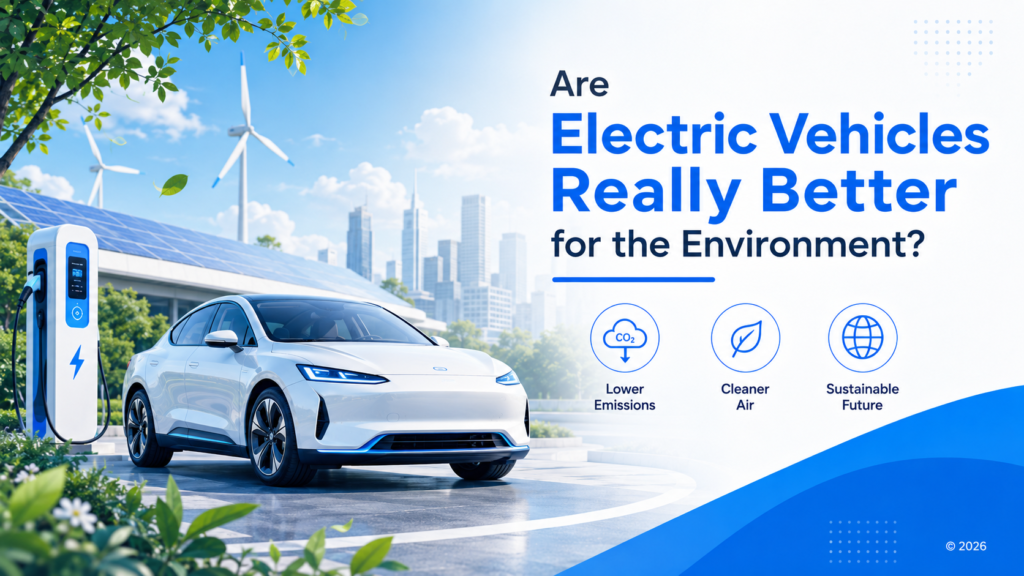
Charging from a grid that relies heavily on coal or natural gas produces more indirect emissions.
Even in these areas, EVs are often more environmentally friendly than gasoline cars because electric motors use energy much more efficiently. The exact advantage, however, may be smaller than it would be in a region powered mainly by renewable or low-carbon electricity.
The EPA estimates that electric vehicles use approximately 87%–91% of the energy available from their batteries and regenerative braking to move the vehicle. Gasoline vehicles convert only around 16%–25% of the energy in their fuel into movement.
Gasoline and diesel vehicles produce emissions every time their engines are running. Their environmental impact also includes extracting crude oil, transporting it, refining it into fuel, delivering the fuel to stations, and burning it inside the vehicle.
Electric vehicles have higher emissions during battery production, but their emissions during operation are generally much lower.
The International Energy Agency estimates that a medium-sized battery electric car sold in 2023 produces around half the life-cycle emissions of an equivalent conventional car over approximately 15 years or 200,000 kilometres. The environmental benefit is expected to increase as electricity grids become cleaner.
This means the correct comparison is not:
EV battery production versus gasoline-car production
It is:
The full lifetime of an EV versus the full lifetime of a gasoline car.
When the complete life cycle is considered, electric vehicles normally have the lower carbon footprint.
EV batteries create real environmental challenges. Mining battery minerals can require significant amounts of water and energy. Poorly managed mining operations may damage habitats, contaminate water, or create unsafe working conditions.
These concerns should not be ignored. However, battery technology and supply chains are continuing to improve.
Manufacturers are working to:
The IEA reports that battery-related emissions are important but are not the largest contributor to the total life-cycle emissions of an electric vehicle. It also expects battery emissions to decline as factories use cleaner energy, batteries become more energy-dense, and recycled materials become more widely available.
Electric vehicle batteries contain valuable materials such as lithium, nickel, cobalt, copper, aluminium, and graphite. Many of these materials can be recovered and used in new batteries or other products.
Battery recycling can:
Some batteries may also be reused before recycling. An EV battery that no longer provides enough range for a vehicle may still be useful for stationary energy storage, such as storing electricity from solar panels.
The IEA estimates that effective recycling could reduce future demand for lithium and nickel by approximately 25% and cobalt by around 40% by 2050 under a scenario aligned with national climate targets.
However, recycling systems must expand as more electric vehicles reach the end of their useful lives.
One of the clearest environmental benefits of electric vehicles is improved local air quality.
Traditional vehicles release pollutants directly into streets and residential areas. These emissions can be especially harmful in crowded cities, near schools, and along busy roads.
Electric vehicles do not create exhaust fumes while driving. Replacing gasoline and diesel vehicles with EVs can therefore help reduce street-level exposure to combustion-related pollutants.
This does not eliminate all vehicle pollution. EVs still produce particles through tyres, roads, and brakes. Their regenerative braking systems can reduce the use and wear of conventional friction brakes, but tyre pollution remains an environmental concern.
Vehicle size matters regardless of how the vehicle is powered.
Large electric SUVs and trucks require:
A smaller electric car is generally better for the environment than a large electric SUV.
However, a large electric vehicle can still produce lower life-cycle emissions than a similar gasoline-powered vehicle. The IEA estimates that choosing a large battery electric SUV instead of an internal-combustion vehicle can reduce life-cycle emissions by approximately 60%, depending on the vehicles and assumptions being compared.
Consumers can increase the environmental benefit of switching to an EV by choosing the smallest battery and vehicle that comfortably meet their needs.
Although EVs are generally cleaner over their lifetime, their environmental advantage can be reduced in certain situations.
This may happen when:
An EV provides the greatest environmental benefit when it is efficient, charged with clean electricity, driven for many years, and properly recycled at the end of its life.
EV owners can make their vehicles even cleaner by following a few practical steps.
Charging with electricity generated from solar, wind, or another low-carbon source reduces operational emissions.
A smaller and lighter EV usually requires fewer materials and less electricity.
Drivers should select a battery range that matches their normal travel requirements instead of automatically choosing the largest available pack.
Using the same vehicle for many years spreads its manufacturing impact across a greater driving distance.
Correct tyre pressure improves efficiency and can reduce unnecessary energy consumption and tyre wear.
Gradual acceleration, efficient speeds, and effective use of regenerative braking can increase driving efficiency.
At the end of its useful life, the battery should be handled by an approved reuse or recycling programme.
Electric vehicles are an important part of cleaner transportation, but replacing every gasoline car with an electric car will not solve every environmental problem.
EVs still require:
They also do not directly solve traffic congestion or excessive land use.
A cleaner transportation system should combine electric vehicles with:
The most environmentally friendly journey is often one that does not require a private car. However, when a car is necessary, an efficient electric vehicle is usually one of the cleaner available choices.
Electric vehicles are expected to become more sustainable as technology improves.
Future developments may include:
Unlike a gasoline car, an EV can become cleaner during its lifetime as the electricity grid adds more renewable energy.
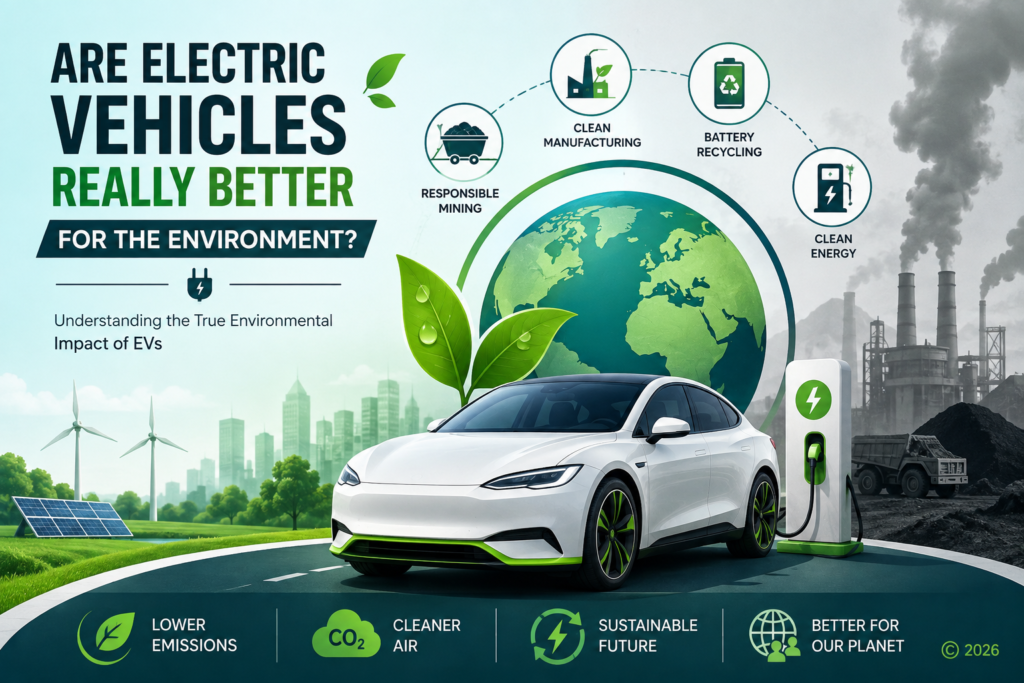
No vehicle is completely free from environmental impact. EV production, electricity generation, tyres, batteries, and raw-material extraction all create some pollution. However, EVs generally produce lower total life-cycle emissions than gasoline vehicles.
Electric cars can produce more emissions during manufacturing because of battery production. These additional emissions are normally compensated for by lower emissions during years of driving.
In many cases, yes. Electric motors are much more efficient than internal-combustion engines. However, an EV’s environmental advantage is greater when it is charged using renewable or low-carbon electricity.
Larger batteries require more minerals and energy to manufacture. Choosing an appropriately sized battery can reduce the vehicle’s manufacturing impact and overall weight.
Yes. Valuable materials such as lithium, nickel, cobalt, copper, and aluminium can be recovered. Battery recycling is still expanding, but it is expected to become increasingly important as more EV batteries reach the end of their lives.
Yes. Like all road vehicles, EVs create tyre and road-wear particles. Regenerative braking can reduce conventional brake wear, but it does not eliminate non-exhaust pollution.
Generally, yes. Smaller EVs require fewer materials, smaller batteries, and less electricity. Drivers should choose a vehicle size that matches their actual transportation needs.
Yes. Cleaner electricity, improved battery technology, responsible mineral sourcing, efficient manufacturing, and better recycling can continue reducing the environmental impact of electric vehicles.
Yes, electric vehicles are generally better for the environment than gasoline or diesel vehicles when their complete life cycle is considered.
EV manufacturing—especially battery production—creates significant environmental impacts. Mining, electricity generation, tyre wear, and recycling must also be considered. Therefore, electric vehicles should not be described as completely pollution-free.
However, EVs offer several major advantages:
The environmental benefits are greatest when drivers choose efficient vehicles, avoid oversized batteries, charge with cleaner electricity, keep their vehicles for many years, and recycle batteries responsibly.
Electric vehicles are not a perfect solution, but they represent a major step toward cleaner and more sustainable transportation.