Physical Address
304 North Cardinal St.
Dorchester Center, MA 02124
Physical Address
304 North Cardinal St.
Dorchester Center, MA 02124

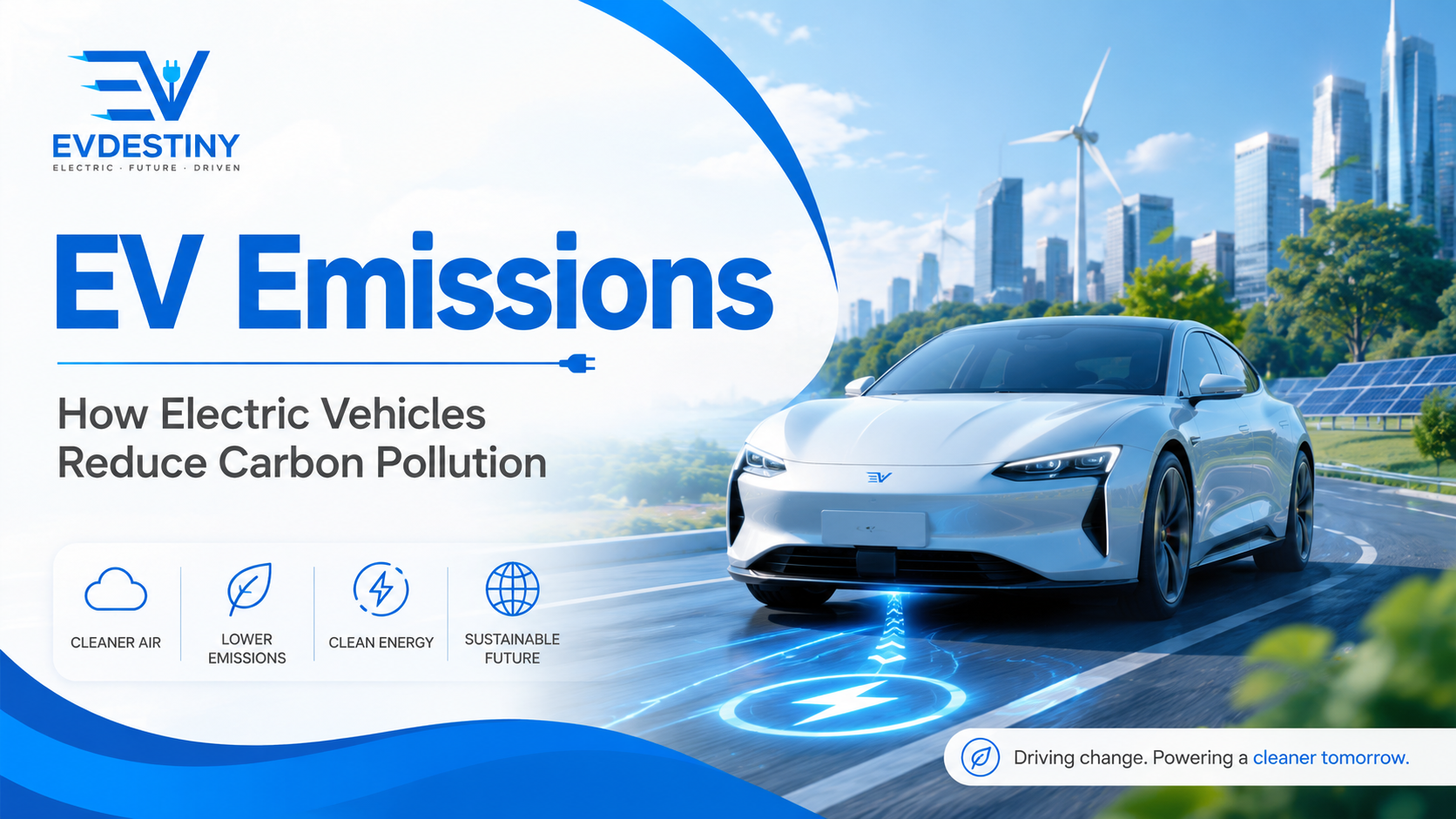
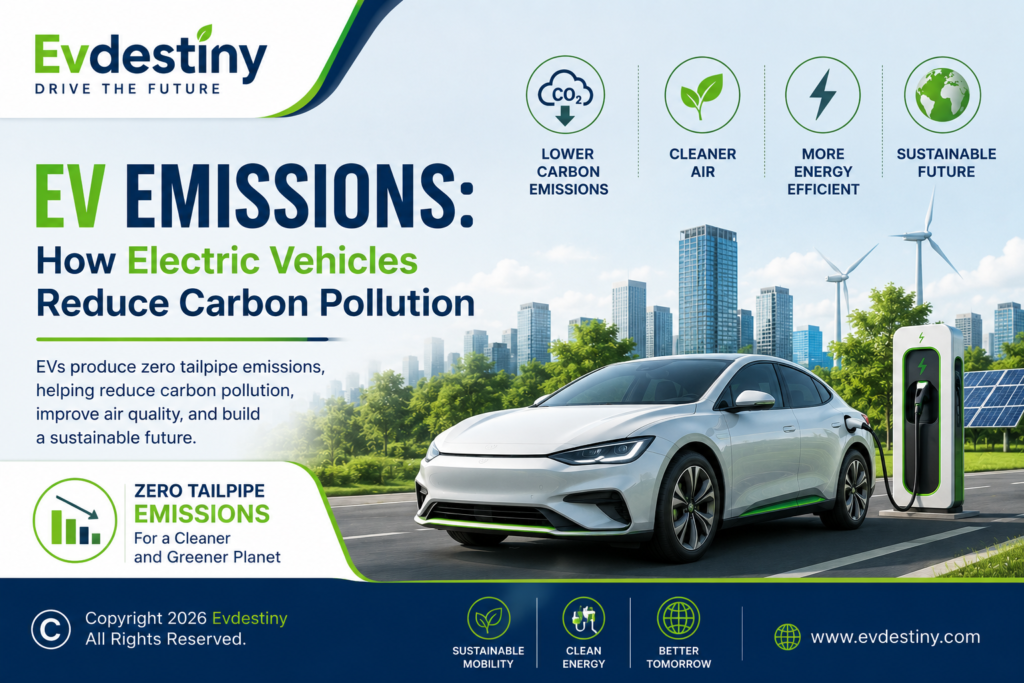
EV emissions are an important topic in the modern transportation industry because electric vehicles are helping reduce carbon pollution and support cleaner mobility. Unlike petrol and diesel vehicles, electric vehicles do not burn fuel while driving. Instead, they use battery power and electric motors, which means they produce zero tailpipe emissions on the road.
As more drivers look for cleaner and more efficient transport options, electric vehicles are becoming a strong alternative to traditional fuel-powered cars. EVs can help reduce air pollution, lower greenhouse gas emissions, and support a more sustainable transportation future. Although EVs are not completely emission-free during manufacturing and electricity production, their overall environmental impact is usually lower than petrol and diesel vehicles.
EVs have no tailpipe emissions
EV emissions refer to the carbon emissions connected with electric vehicles. Fully electric vehicles do not produce exhaust smoke or tailpipe pollution while driving because they do not use petrol or diesel engines.
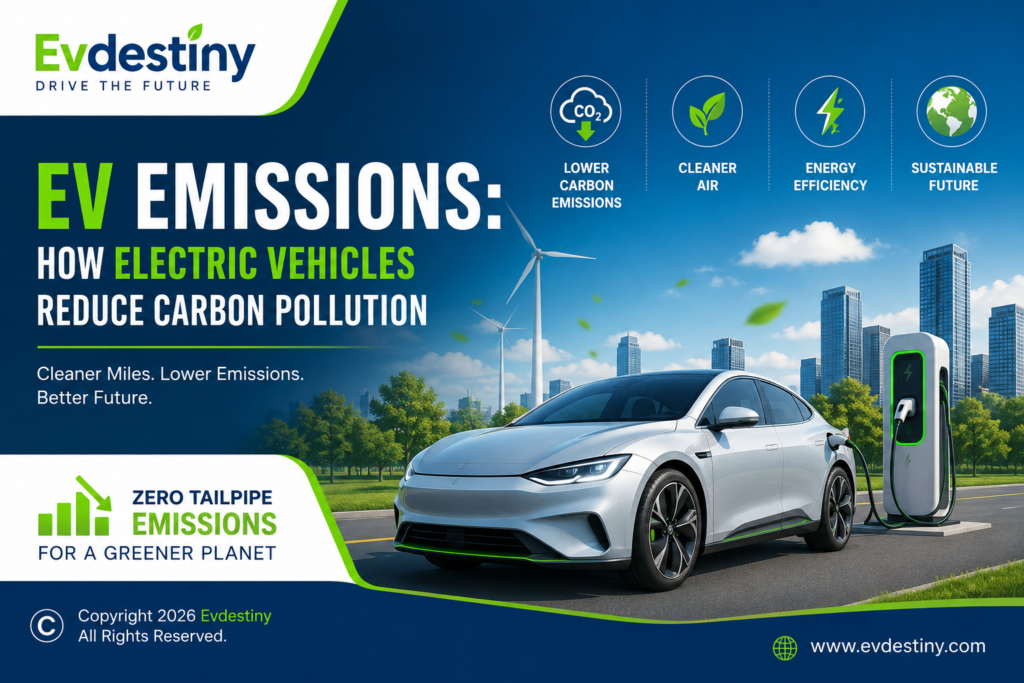
However, EV emissions can still come from other sources, such as electricity generation and battery production. For example, if an EV is charged using electricity made from coal or gas, some emissions are created at the power plant. Battery manufacturing can also create emissions because it requires raw materials, energy, and factory production.
Even with these factors, electric vehicles are still considered a cleaner transportation option because they remove direct road emissions and become cleaner as electricity grids use more renewable energy.
Petrol and diesel vehicles use internal combustion engines. These engines burn fossil fuels to create power. When fuel burns, it releases carbon dioxide, smoke, and other harmful gases into the air.
This is one of the main reasons traditional vehicles contribute to air pollution and climate change. Every time a petrol or diesel car is driven, it produces tailpipe emissions. These emissions are especially harmful in crowded cities where traffic is high and air quality is already poor.
Electric vehicles reduce this problem because they do not burn fuel during driving.
Electric vehicles reduce carbon pollution by replacing fuel-burning engines with electric motors. Since EVs run on electricity, they do not release carbon dioxide from an exhaust pipe while driving.
EVs are also more energy-efficient than petrol and diesel cars. A fuel-powered vehicle wastes a large amount of energy as heat, while an electric motor uses energy more efficiently to move the vehicle. This means EVs need less energy to travel the same distance.
Electric vehicles reduce carbon pollution by replacing fuel-burning engines with electric motors. Since EVs run on electricity, they do not release carbon dioxide from an exhaust pipe while driving.
Smart and Software-Defined Vehicles
Another important electric vehicle trend is the rise of software-defined vehicles. Modern EVs are becoming more like smart devices on wheels. Features such as over-the-air updates, AI driving assistance, smart dashboards, connected apps, and advanced safety systems are becoming standard.
Lower energy waste and zero tailpipe emissions make electric vehicles a powerful solution for reducing carbon pollution in transportation.
One of the biggest benefits of lower EV emissions is better air quality. Fully electric vehicles do not release exhaust smoke on roads, which helps reduce pollution in cities, highways, and residential areas.
Cleaner air is important for public health. High pollution levels can affect breathing, increase health problems, and make cities less comfortable to live in. When more people use electric vehicles, local air pollution can decrease, especially in areas with heavy traffic.
This makes EVs useful not only for reducing carbon emissions but also for creating cleaner and healthier communities.
Battery manufacturing is an important part of the EV emissions discussion. Electric vehicle batteries require materials such as lithium, nickel, cobalt, and other minerals. Mining, processing, and manufacturing these materials can create emissions.
However, battery technology is improving. Automakers are working on cleaner production methods, longer-lasting batteries, and better recycling systems. Battery recycling can reduce the need for new raw materials and lower the environmental impact of future EV production.
As battery recycling becomes more advanced, EV emissions from manufacturing can become lower over time.
Electric vehicles become even cleaner when they are charged with renewable energy. Solar power, wind energy, hydropower, and other clean energy sources can reduce the carbon footprint of EV charging.
If an EV is charged using clean electricity, its overall emissions can be much lower compared to a petrol or diesel car. This is why renewable energy and electric vehicles work well together.
In the future, as more countries invest in clean electricity, EV emissions will continue to decrease. This means electric vehicles will become even better for the environment as the energy system becomes greener.
| Feature | Electric Vehicles | Petrol/Diesel Vehicles |
|---|---|---|
| Tailpipe emissions | Zero while driving | Produces carbon dioxide and smoke |
| Fuel source | Electricity | Petrol or diesel |
| Air quality impact | Helps reduce local air pollution | Increases road pollution |
| Energy efficiency | More efficient | Less efficient |
| Maintenance emissions | Lower because fewer moving parts | Higher due to engine and fuel system |
| Future potential | Cleaner with renewable energy | Always depends on fossil fuels |
“The future of transportation is not only electric; it is smarter, cleaner, and more connected than ever before.”
Reducing EV emissions brings many benefits for people, cities, and the environment. Lower emissions help reduce the impact of climate change and support cleaner transportation systems.
Electric vehicles also reduce noise pollution because they are quieter than traditional fuel-powered cars. This can make cities more peaceful and comfortable. For drivers, EVs can also reduce fuel dependency and support modern clean technology.
The main benefits of lower EV emissions include cleaner air, less carbon pollution, improved public health, reduced fossil fuel use, and a more sustainable future.
The future of EV emissions will depend on cleaner electricity, better batteries, and improved manufacturing methods. As renewable energy grows, EV charging will become cleaner. As battery technology improves, electric vehicles will become more efficient and affordable.
Automakers are also focusing on sustainable production, battery recycling, and reducing factory emissions. These improvements will help lower the total environmental impact of electric vehicles.
In the coming years, EVs will play a major role in reducing transportation emissions and supporting the global shift toward clean mobility.
EV emissions are the carbon emissions connected with electric vehicles. Fully electric vehicles do not produce tailpipe emissions while driving, but emissions may come from electricity generation and battery production.
Electric vehicles produce zero tailpipe emissions while driving. However, they are not completely emission-free because electricity production and battery manufacturing can create emissions.
Yes, EV emissions are usually lower than petrol and diesel car emissions, especially when the vehicle is charged using clean or renewable electricity.
EVs reduce carbon pollution by using electricity instead of burning petrol or diesel. Since they do not have exhaust emissions, they help reduce direct pollution from road transport.
Yes, EV battery manufacturing can create emissions because it requires raw materials and energy. However, battery recycling and cleaner manufacturing can reduce this impact in the future.
Yes, EVs are better for air quality because they do not release exhaust smoke while driving. This helps reduce local pollution in cities and crowded areas.
Yes, renewable energy can greatly reduce EV emissions. Charging EVs with solar, wind, or hydropower makes electric vehicles much cleaner.
The future of EV emissions will improve as renewable energy grows, battery recycling expands, and automakers use cleaner manufacturing methods.