Physical Address
304 North Cardinal St.
Dorchester Center, MA 02124
Physical Address
304 North Cardinal St.
Dorchester Center, MA 02124
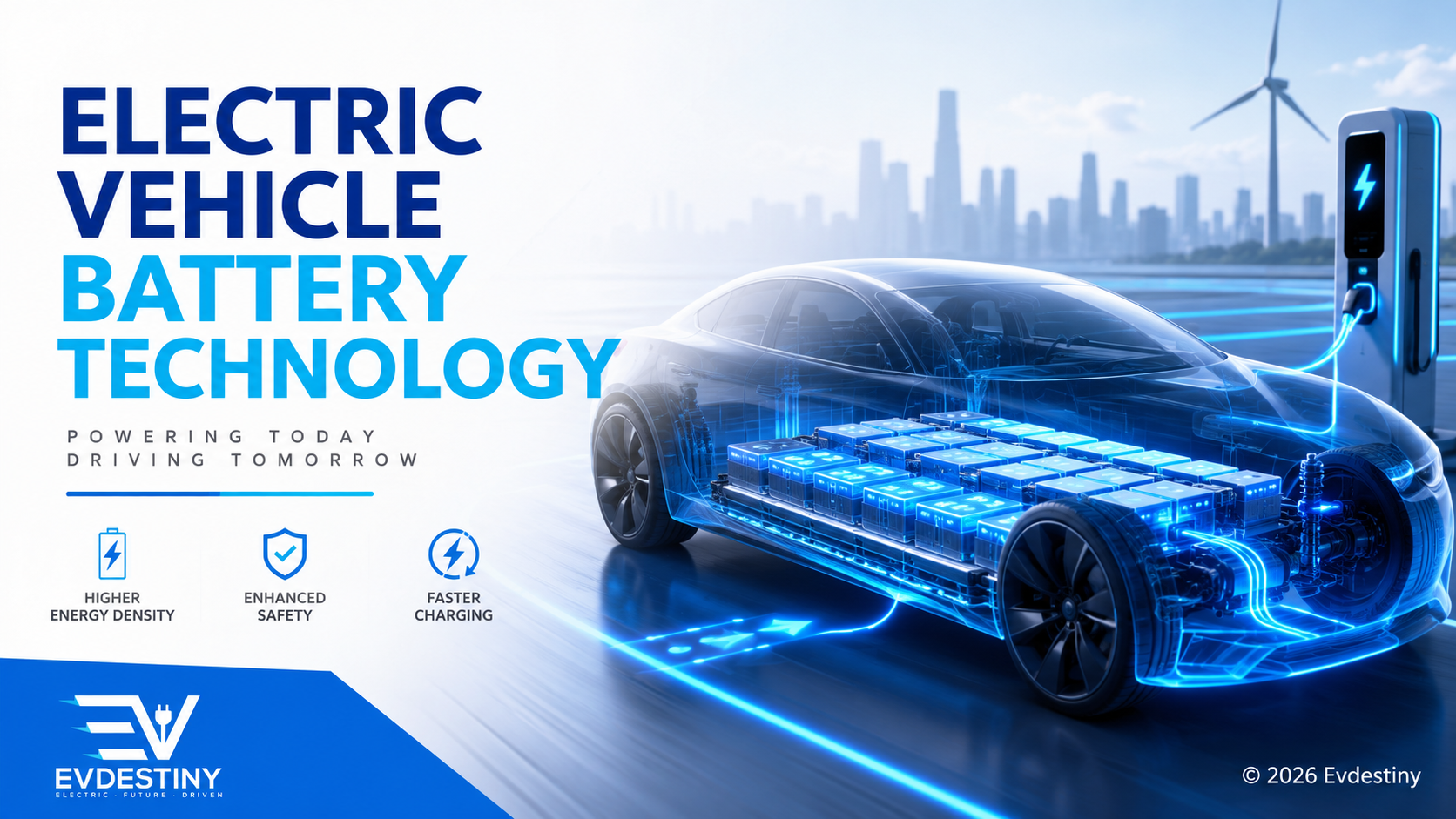
Electric vehicle battery technology is one of the most important parts of the global transition toward cleaner and more efficient transportation. The battery works as the main energy source of an electric vehicle, supplying electricity to the motor and supporting different vehicle systems. Its capacity, chemistry, design, and management system directly influence driving range, charging time, safety, performance, and vehicle price.
Modern EV batteries have improved significantly compared with earlier battery systems. Manufacturers are developing batteries that can store more energy, charge faster, last longer, and perform safely under different weather and driving conditions. Improvements in lithium-ion batteries, lithium iron phosphate batteries, battery management software, solid-state technology, and recycling systems are helping electric vehicles become more practical for everyday drivers.
Global EV battery deployment reached approximately 1.2 terawatt-hours in 2025, representing an increase of almost 30% compared with 2024. This growth shows how battery development has become a central part of the expanding electric vehicle industry.
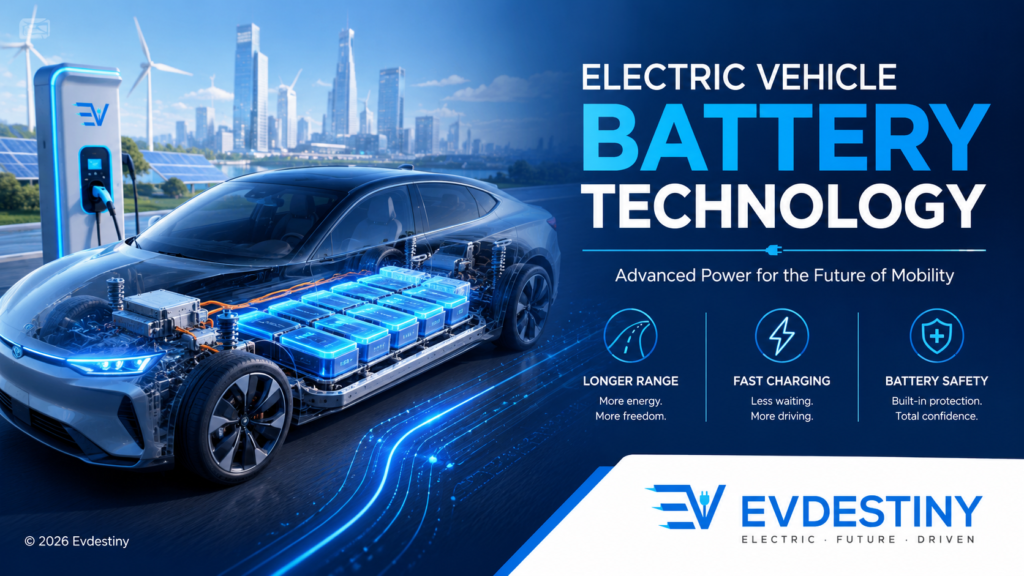
Electric vehicle battery technology includes the battery cells, modules, battery pack, control software, cooling system, safety equipment, and charging components used to store and deliver electrical energy.
Electric cars can also support renewable energy development and smarter electricity systems. When combined with clean electricity, modern charging infrastructure, and responsible battery production, EVs can help create a cleaner transportation system for future generations.
The battery must perform several important tasks. It must store enough electricity for daily travel, deliver power to the electric motor, accept energy during charging, recover energy through regenerative braking, and continue operating safely in different temperatures.
An EV battery stores energy in chemical form and converts it into electrical energy when the vehicle is driven. The electricity travels from the battery pack to the electric motor, which turns the vehicle’s wheels.
When the driver connects the vehicle to a charging station, electricity flows into the battery and restores its stored energy. During regenerative braking, the electric motor can also work like a generator. It captures part of the vehicle’s movement energy and returns it to the battery instead of losing all that energy as heat through traditional brakes.
Lithium-ion and solid-state batteries generally contain four main components:
The cathode and anode store lithium ions, while the electrolyte allows the ions to move between them. The separator helps prevent direct contact between the electrodes, reducing the risk of an electrical short circuit.
Different battery chemistries offer different combinations of cost, energy capacity, safety, charging performance, and lifespan. Manufacturers select a battery type according to the vehicle’s design and purpose.
The main battery technologies associated with electric vehicles include:
Some battery types are designed to provide maximum driving range, while others focus on affordability, long life, thermal stability, or reduced dependence on expensive materials.
Lithium-ion batteries remain the most widely used battery technology in modern electric vehicles. They offer high energy density, good efficiency, relatively low weight, and the ability to complete many charging cycles.
High energy density means the battery can store a large amount of electricity without becoming excessively large or heavy. This is important because additional battery weight can affect vehicle efficiency, acceleration, braking, and handling.
Lithium-ion batteries are also commonly used in smartphones, laptops, power tools, electric bicycles, and renewable-energy storage systems. However, automotive battery packs require more advanced cooling, monitoring, structural protection, and safety systems than smaller consumer batteries.
Lithium iron phosphate, commonly known as LFP, has become an increasingly important EV battery chemistry. LFP batteries generally provide strong thermal stability, long operating life, and lower material costs because they do not depend on nickel or cobalt in the cathode.
Their energy density may be lower than some nickel-based batteries, meaning a larger or heavier pack may be required to provide the same driving range. However, their durability and affordability make them suitable for standard-range electric cars, commercial fleets, buses, and vehicles designed for frequent charging.
According to the International Energy Agency, LFP batteries represented more than 55% of EV batteries deployed globally in 2025, increasing from nearly 50% in 2024. Their adoption has been especially strong in China and emerging EV markets.
Solid-state batteries are considered one of the most promising future electric vehicle battery technologies. Traditional lithium-ion batteries usually contain a liquid electrolyte, while solid-state batteries use a solid electrolyte.
A solid electrolyte may improve battery safety because it is less likely to leak following damage. It could also support batteries with greater energy storage capacity, allowing electric vehicles to travel farther without requiring a physically larger pack.
The technology may eventually provide several benefits:
However, solid-state batteries still face challenges related to manufacturing complexity, production cost, material performance, and large-scale commercial production. The technology must be manufactured reliably and affordably before it becomes common in mass-market electric vehicles.
The U.S. Department of Energy identifies solid-state batteries as a next-generation technology with potential benefits involving performance, safety, and cost.
Sodium-ion batteries use sodium instead of lithium as one of their key materials. Sodium is widely available, which could help battery manufacturers reduce their dependence on limited or geographically concentrated mineral supplies.
Sodium-ion batteries may be suitable for affordable electric vehicles, short-distance transport, energy storage, and applications where low cost is more important than maximum driving range.
Their current energy density is generally lower than that of leading lithium-ion batteries. This can make them less suitable for premium or long-range vehicles. Nevertheless, continued research may improve their performance and make them an important alternative for selected EV categories.
The Department of Energy lists sodium-ion batteries among next-generation battery systems that may use different materials and reduce reliance on certain critical resources.
Charging time is one of the biggest concerns for people considering an electric vehicle. Faster battery charging can make long-distance travel more convenient and reduce waiting times at public charging stations.
Battery developers are improving electrode materials, cell designs, cooling systems, charging software, and power electronics. These improvements allow batteries to receive electricity more quickly while controlling heat and protecting the cells.
However, charging speed does not depend only on the battery. It is also affected by:
Many EVs charge most quickly when the battery is at a lower state of charge. Charging normally slows as the battery becomes nearly full because the battery management system reduces power to protect battery health.
A battery management system, or BMS, is the electronic control system responsible for monitoring and protecting the EV battery pack.
The BMS continuously checks important conditions such as:
If the system detects excessive heat, unusual voltage, or another unsafe condition, it can limit charging or power delivery. It can also send a warning to the driver or disconnect part of the battery system when necessary.
Modern battery management systems use advanced software to calculate the vehicle’s remaining range and charging time. Accurate calculations help drivers plan journeys and understand how weather, speed, air conditioning, and driving behaviour affect available range.
Battery temperature has a major effect on EV performance and charging speed. A battery that becomes too hot may experience faster degradation or safety problems. A battery that is extremely cold may temporarily deliver less power and charge more slowly.
Electric vehicles use thermal management systems to maintain a suitable battery temperature. Depending on the vehicle, these systems may use liquid cooling, air cooling, heating elements, heat pumps, or refrigerant-based cooling.
Some EVs also use battery preconditioning. Before the driver reaches a rapid-charging station, the vehicle automatically warms or cools the battery to an appropriate temperature. This helps the battery accept a higher charging rate when the vehicle is connected.
Research supported by the Department of Energy focuses on reducing thermal-management costs, improving battery monitoring sensors, increasing battery life, and strengthening tolerance to demanding conditions.
Driving range is strongly connected to battery capacity, but installing a larger battery is not the only solution. Larger packs increase vehicle weight, manufacturing cost, and mineral requirements.
Manufacturers are improving range through several methods:
These improvements allow vehicles to travel farther using the same amount of stored energy. Future batteries may provide longer range without requiring extremely heavy or expensive battery packs.
Electric vehicle batteries are designed with several layers of safety protection. Individual cells, modules, the battery enclosure, cooling system, software, and vehicle structure all contribute to battery safety.
Modern EV safety systems may include:
Battery packs also undergo testing for vibration, impact, temperature changes, electrical faults, water exposure, and other demanding conditions. Researchers and manufacturers continue working to reduce risks and improve battery behaviour during accidents or technical failures.
An electric vehicle battery does not normally stop working suddenly. Instead, its maximum energy-storage capacity gradually decreases over time.
Battery ageing can be affected by:
Manufacturers use protective software to reserve a small portion of battery capacity that drivers cannot access. This buffer helps reduce stress on the cells and supports longer battery life.
Good thermal management, controlled charging, improved cell chemistry, and accurate battery monitoring are helping modern EV batteries remain useful for longer periods.
EV battery recycling can recover valuable materials such as lithium, nickel, cobalt, and copper. These materials may be processed and returned to the battery supply chain, reducing waste and supporting future battery manufacturing.
Used EV batteries may also be considered for second-life applications. A battery that no longer provides the desired driving range may still have enough capacity for stationary electricity storage, backup power, or renewable-energy systems.
Battery recycling is expected to become increasingly important as larger numbers of electric vehicles reach the end of their working lives. However, many recently manufactured EV batteries are still operating, so manufacturing scrap currently represents a major source of recycling material.
The IEA reports that battery circularity—including recycling, vehicle reuse, and repurposing—can support mineral supplies and reduce supply-chain challenges. Innovation related to battery circularity increased rapidly between 2017 and 2023.
Although battery technology continues to improve, several challenges remain.
The battery pack remains one of the most expensive parts of an electric vehicle. Reducing battery cost is important for making EVs more affordable.
Battery production depends on materials such as lithium, graphite, nickel, cobalt, copper, iron, and phosphate. Mining, refining, and transporting these materials can create economic, environmental, and supply-chain concerns.
Rapid charging is improving, but repeated high-power charging must be carefully controlled to protect battery life and safety.
Extreme temperatures can affect battery performance, charging speed, and driving range. Effective thermal management adds cost and complexity to the vehicle.
Large battery packs can be heavy. Manufacturers must balance range requirements with vehicle efficiency, price, interior space, and material use.
Battery collection, transportation, disassembly, testing, and recycling require specialised facilities and safety procedures. Recycling systems must expand alongside the number of electric vehicles.
The future of electric vehicle battery technology will focus on producing batteries that are safer, lighter, cheaper, longer-lasting, and easier to recycle.
Important future developments may include:
Battery prices declined by approximately 8% during 2025, supported by manufacturing improvements, changes in battery chemistry, technological development, competition, and lower prices for some critical materials. Continued progress could help manufacturers produce more affordable electric vehicles.
As batteries improve, electric vehicles will become more practical for private drivers, delivery companies, public transport, commercial fleets, and long-distance travel.
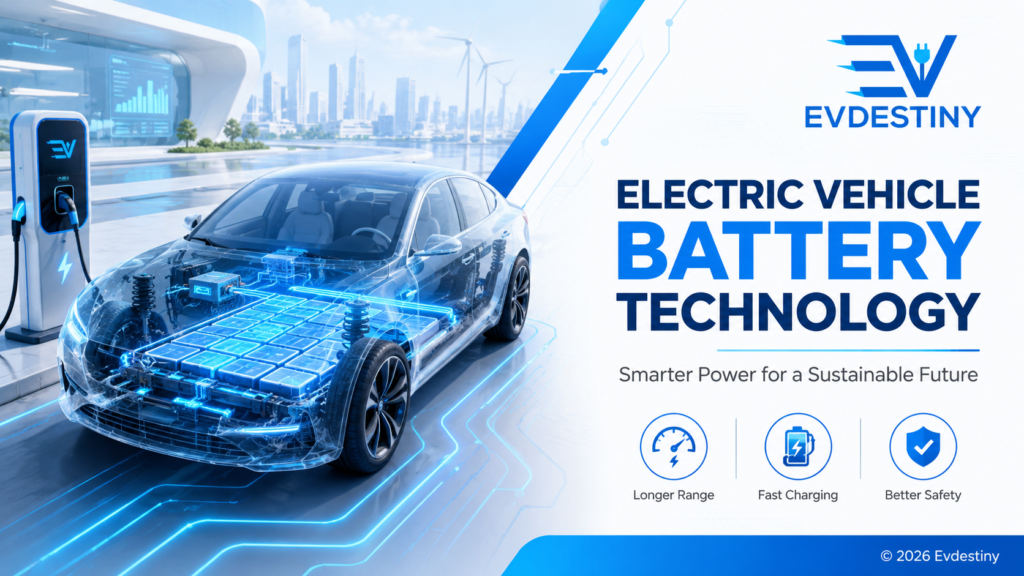
Electric vehicle battery technology includes the cells, battery pack, cooling equipment, charging components, safety systems, and management software used to store and control electricity inside an EV.
Lithium-ion batteries are widely used because they provide good energy density, efficiency, performance, and operating life. LFP is also becoming increasingly common, particularly in affordable and standard-range electric vehicles.
An LFP battery is a lithium-ion battery that uses lithium iron phosphate as its cathode material. It is known for thermal stability, long cycle life, and relatively affordable materials.
Solid-state batteries may provide higher energy density and improved safety, but manufacturing cost, durability, and mass production remain major challenges. Most current electric vehicles still use conventional lithium-ion battery systems.
Battery lifespan depends on chemistry, temperature, mileage, charging habits, thermal management, and vehicle design. Capacity normally decreases gradually rather than disappearing suddenly.
Yes. Recycling processes can recover materials such as lithium, nickel, cobalt, and copper. Recycling capacity and collection systems are continuing to expand as the EV market grows.
Charging speed is affected by charger power, vehicle charging capability, battery temperature, chemistry, current charge level, and the battery management system.
Better battery chemistry can store more energy within the same space and weight. Range can also be improved through efficient motors, lightweight materials, aerodynamics, regenerative braking, and intelligent energy-management software.
Electric vehicle battery technology is transforming modern transportation. Improvements in lithium-ion cells, LFP chemistry, solid-state designs, charging systems, battery software, thermal management, and recycling are helping electric vehicles travel farther, charge more quickly, and operate more safely.
Although challenges involving cost, materials, weight, recycling, and charging infrastructure remain, battery research continues to deliver important progress. Future EV batteries are expected to provide better performance while requiring fewer expensive materials.
As battery technology develops, electric vehicles will become more affordable, reliable, sustainable, and convenient. Better batteries will therefore remain one of the most important factors shaping the future of electric mobility.