Physical Address
304 North Cardinal St.
Dorchester Center, MA 02124
Physical Address
304 North Cardinal St.
Dorchester Center, MA 02124

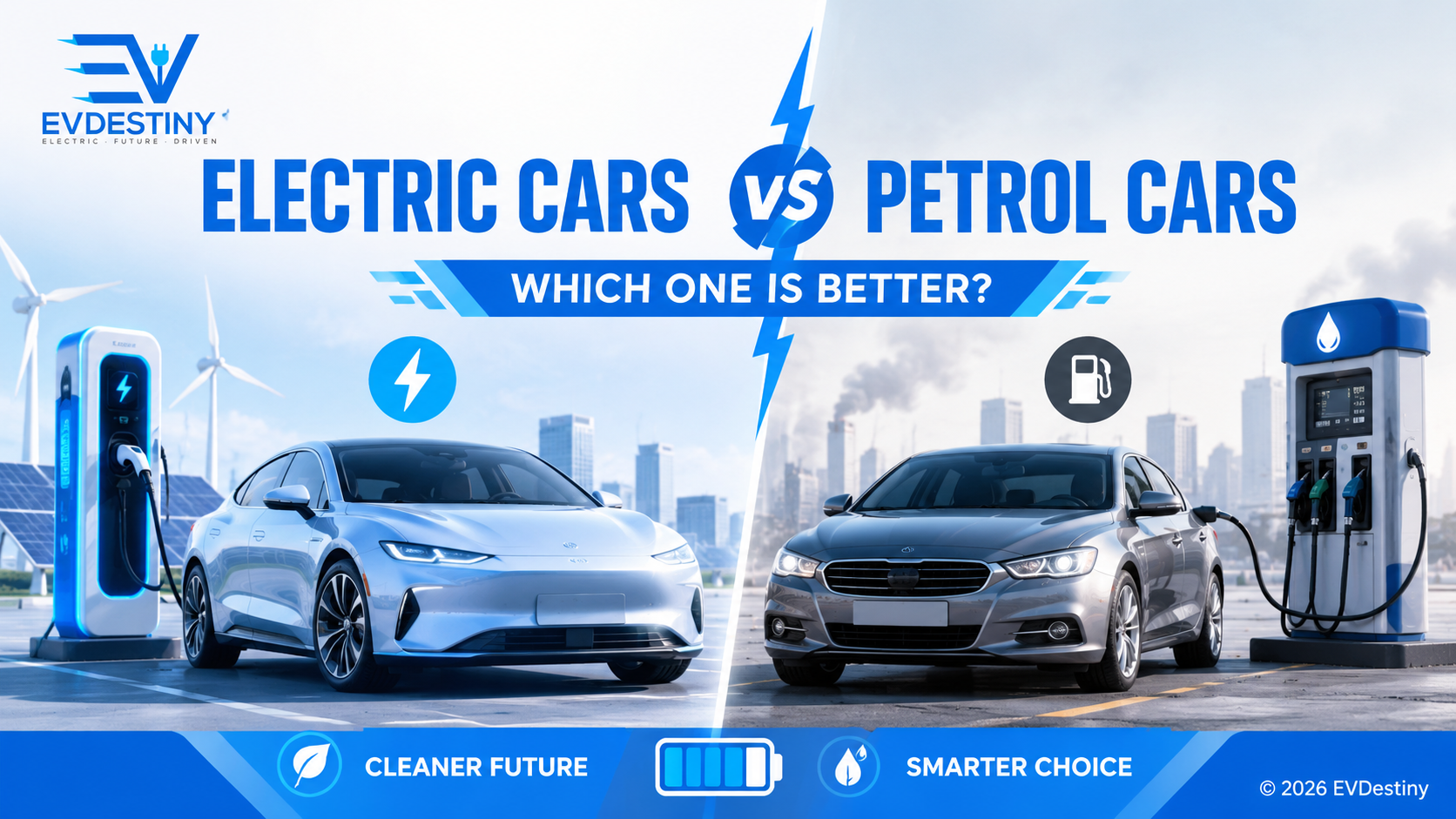
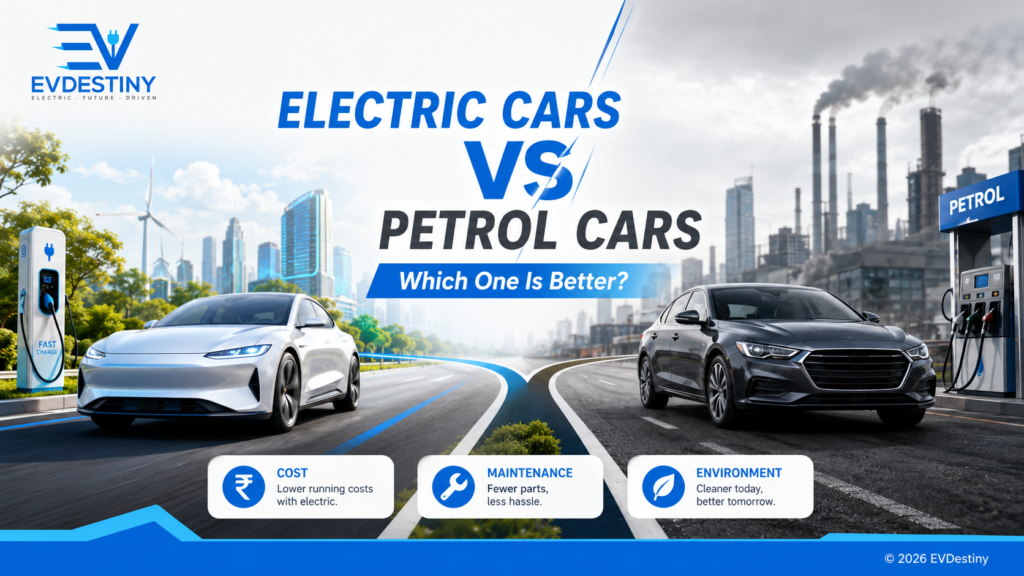
Electric cars and petrol cars are two of the most common choices for modern drivers, but both come with different advantages. Petrol cars have been used for decades because they are easy to refuel, widely available, and familiar to most people. Electric cars, on the other hand, are becoming more popular because they offer lower running costs, cleaner driving, smooth performance, and modern technology features.
As the world moves toward cleaner transportation, many drivers are asking one important question: electric cars vs petrol cars, which one is better? The answer depends on your daily travel, budget, charging access, fuel prices, and long-term goals. Electric cars are usually better for people who want low maintenance, lower emissions, and a modern driving experience. Petrol cars may still be better for drivers who travel long distances regularly, live in areas with fewer charging stations, or want a lower initial purchase price.
According to the International Energy Agency, electric vehicle adoption and charging infrastructure continue to grow worldwide, showing that EVs are becoming a major part of future mobility. The U.S. EPA also explains that electric vehicles usually have a smaller carbon footprint than petrol vehicles, even when electricity used for charging is included.
An electric car is a vehicle that runs on electricity instead of petrol or diesel. It uses a battery pack to store energy and an electric motor to move the car. Electric cars do not have a traditional fuel engine, exhaust system, or fuel tank. Instead, they are charged using a home charger, public charging station, or workplace charger.
Electric cars are known for quiet driving, instant acceleration, fewer moving parts, and zero tailpipe emissions. They are also becoming more advanced with smart software, regenerative braking, digital dashboards, and improved battery range.
A petrol car uses an internal combustion engine that burns petrol to produce power. Petrol cars are widely used because fuel stations are available almost everywhere, and many people are already familiar with their driving and maintenance needs.
Petrol cars are convenient for long-distance travel because refueling takes only a few minutes. However, they produce exhaust emissions, require more regular maintenance, and depend on fuel prices, which can increase over time.
| Feature | Electric Cars | Petrol Cars |
|---|---|---|
| Fuel Type | Electricity | Petrol |
| Running Cost | Usually lower | Usually higher |
| Maintenance | Less maintenance | More maintenance |
| Emissions | No tailpipe emissions | Produces exhaust emissions |
| Driving Experience | Smooth and quiet | Traditional engine feel |
| Refueling/Charging | Charging takes longer | Refueling is faster |
| Long-Term Future | Strong future growth | Gradually reducing demand |
| Best For | Daily driving and clean mobility | Long trips and areas with fewer chargers |
One of the biggest advantages of electric cars is lower running cost. Charging an EV is often cheaper than buying petrol, especially for daily city driving. The U.S. Department of Energy states that electric-only driving can cost around $0.03 to $0.10 per mile, while gasoline driving can cost around $0.04 to $0.36 per mile depending on fuel prices and vehicle efficiency.
Petrol cars may be cheaper to buy at first, but fuel costs can become expensive over time. For drivers who travel every day, an electric car can save money in the long run because electricity is generally more efficient than petrol combustion.
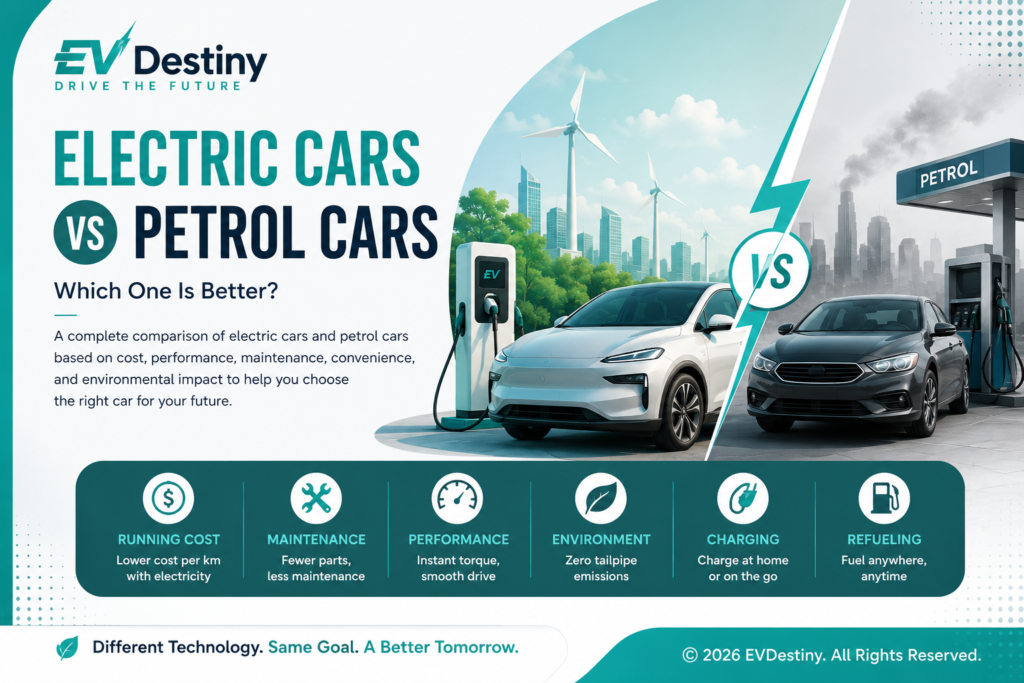
Electric cars usually need less maintenance than petrol cars. This is because EVs have fewer moving parts and do not need engine oil changes, spark plugs, fuel filters, or exhaust system repairs. The electric motor is simpler than a petrol engine, which helps reduce regular service needs.
Petrol cars require more maintenance because their engines have many mechanical parts. Oil changes, engine servicing, fuel system repairs, and exhaust maintenance can increase ownership costs over time. However, petrol car mechanics and spare parts are still easier to find in many places.
Electric cars provide instant torque, which means they can accelerate quickly and smoothly. They are also quiet, comfortable, and easy to drive in city traffic. Many EVs also use regenerative braking, which helps recover energy when the car slows down.
Petrol cars provide a more traditional driving experience. Some drivers still prefer the sound, gear shifting, and engine response of petrol vehicles. For long highway driving, petrol cars can still feel more convenient because refueling is quick and fuel stations are common.
Electric cars are better for reducing air pollution because they do not produce tailpipe emissions. This helps improve air quality, especially in cities where traffic pollution is a major issue. Petrol cars release carbon dioxide and other pollutants from the exhaust, which contributes to air pollution and climate change.
Life-cycle emissions still depend on how electricity is produced and how batteries are manufactured. However, the U.S. EPA says EVs typically have a smaller carbon footprint than gasoline cars, even after considering electricity used for charging. The U.S. Department of Energy’s GREET model also shows that a 2025 EV can produce significantly lower greenhouse gas emissions than a comparable internal combustion engine vehicle.
Petrol cars are more convenient when it comes to refueling. A petrol car can be refilled in just a few minutes, which is helpful for long-distance travel and emergency trips. This is one reason many drivers still feel more comfortable with petrol vehicles.
Electric cars take longer to charge, but charging is becoming easier as infrastructure improves. Many EV owners charge their vehicles at home overnight, so they start each day with a full battery. Public charging stations are also increasing worldwide. In 2024, more than 1.3 million public charging points were added globally, according to the IEA.
Electric cars are better for the future because the automotive industry is moving toward cleaner, smarter, and more efficient vehicles. Governments, car manufacturers, and technology companies are investing heavily in EV batteries, charging networks, and electric mobility solutions.
Petrol cars will not disappear immediately because they are still useful in many areas. But over time, electric cars are expected to become more practical as battery range improves, charging becomes faster, and EV prices become more affordable.
Electric cars are better for drivers who want lower running costs, cleaner transportation, less maintenance, and modern technology. They are especially good for daily commuting, city driving, and people who can charge at home or nearby.
Petrol cars are better for drivers who need quick refueling, travel long distances often, or live in areas where charging stations are not easily available. They are also familiar and widely supported by existing fuel and repair networks.
Overall, electric cars are the better long-term choice, while petrol cars still offer convenience in some situations. As charging infrastructure grows and battery technology improves, EVs will become an even stronger option for future transportation.
“Electric cars are not just changing how we drive; they are changing how we think about cleaner and smarter mobility.”
Yes, electric cars are better in many ways because they have lower running costs, fewer maintenance needs, and no tailpipe emissions. However, petrol cars can still be better for drivers who need fast refueling or travel long distances without easy access to charging stations.
Electric cars are usually cheaper to run because electricity often costs less per mile than petrol. EVs also need less regular maintenance because they do not require oil changes, spark plugs, or many engine-related services.
Both electric and petrol cars can last many years if properly maintained. Petrol cars have more mechanical parts, while electric cars depend heavily on battery health. Modern EV batteries are improving, and many manufacturers offer long battery warranties.
Electric cars can be good for long-distance travel if charging stations are available along the route. However, petrol cars are still more convenient in areas where EV charging infrastructure is limited.
Electric cars are generally better for the environment because they produce no tailpipe emissions and usually have a smaller carbon footprint over their lifetime compared to petrol cars.
You should buy an electric car if you want lower running costs, cleaner driving, and modern features. You should choose a petrol car if charging access is difficult in your area or you need quick refueling for frequent long trips.
The comparison between electric cars vs petrol cars shows that both vehicles have their own benefits. Petrol cars are still convenient and familiar, but electric cars are becoming the smarter choice for the future. With lower running costs, cleaner performance, and fast-growing EV technology, electric cars are leading the next generation of transportation. For drivers who want a future-ready vehicle, an electric car is becoming the better option.