Physical Address
304 North Cardinal St.
Dorchester Center, MA 02124
Physical Address
304 North Cardinal St.
Dorchester Center, MA 02124


The Future of Electric Vehicles is becoming one of the most important topics in modern transportation. Electric vehicles are no longer limited to a few countries or a small group of early adopters. Today, governments, automakers, technology companies, and consumers worldwide are investing heavily in electric mobility. From Europe and Asia to Africa and South America, the transition toward electric transportation is gaining momentum.
Several factors are driving this remarkable change. Rising fuel prices, growing environmental concerns, stricter emission regulations, and rapid technological innovation are all pushing the automotive industry toward electrification. The Future of Electric Vehicles is not only about replacing gasoline cars. It is about creating a smarter, cleaner, and more connected transportation ecosystem that benefits people around the world.
The global automotive landscape is undergoing a profound transformation. Electric vehicles are becoming more practical, affordable, and appealing to consumers. Unlike traditional vehicles that depend entirely on fossil fuels, EVs rely on electricity and advanced battery technologies. This shift is helping nations reduce pollution while improving energy efficiency.
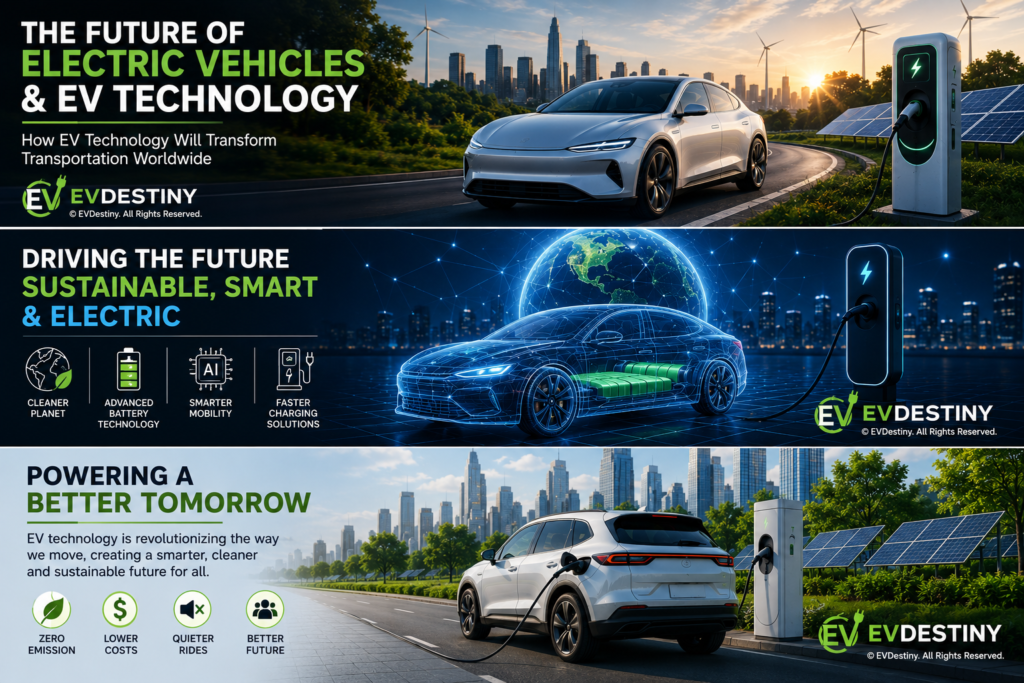
At the same time, governments worldwide are introducing incentives, infrastructure investments, and environmental policies that encourage EV adoption. Manufacturers are responding with larger investments in research, battery production, and vehicle development. Together, these forces are accelerating the Future of Electric Vehicles at a pace few predicted just a decade ago.
Consumer attitudes have changed significantly. Many people now prioritize sustainability, lower operating costs, and advanced technology when purchasing a vehicle. Electric vehicles meet these expectations while offering a smoother and quieter driving experience.
Furthermore, improved battery range has reduced one of the biggest concerns among potential buyers. Modern EVs can travel hundreds of miles on a single charge. Combined with expanding EV charging stations, this advancement has made electric vehicles practical for both daily commuting and long-distance travel.
Automotive manufacturers are investing billions of dollars into electric vehicle production. New battery factories are being built across multiple continents. Research teams are working on next-generation technologies that will improve vehicle performance, efficiency, and affordability.
This investment extends beyond vehicle manufacturing. Companies are developing software platforms, autonomous driving systems, and connected vehicle technologies. These innovations will play a central role in shaping the Future of Electric Vehicles while creating new opportunities for global economic growth.
Environmental sustainability remains one of the strongest drivers behind EV adoption. Transportation contributes significantly to greenhouse gas emissions. Electric vehicles help support Carbon emission reduction by reducing dependence on gasoline and diesel fuels.
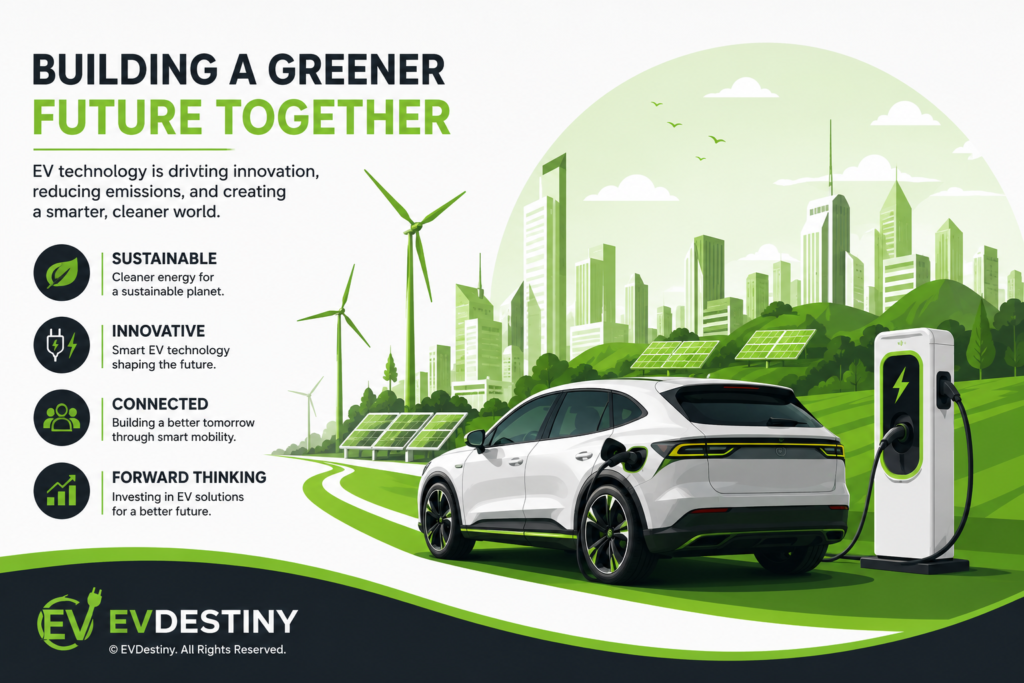
Moreover, electric mobility supports broader environmental goals. Combined with Renewable energy integration, EVs can contribute to cleaner energy systems worldwide. As renewable electricity becomes more common, the environmental benefits of electric transportation continue to grow.
The next decade will bring extraordinary innovation to the EV industry. New technologies will make vehicles smarter, safer, and more efficient. Artificial intelligence, automation, and advanced connectivity will transform how people interact with transportation.
At the same time, electric vehicles will become increasingly integrated into broader energy and mobility systems. The Future of Electric Vehicles extends beyond personal transportation and includes public transit, commercial fleets, logistics operations, and smart city infrastructure.
Future electric vehicles will operate as highly connected digital platforms. Artificial intelligence will monitor vehicle health, optimize energy use, and provide predictive maintenance alerts before problems occur.
Software updates will continuously improve performance throughout a vehicle’s lifespan. Much like smartphones receive regular updates, future EVs will become smarter and more capable over time without requiring physical modifications.
Consumer demand for larger vehicles remains strong worldwide. Manufacturers are responding by introducing electric pickup trucks, SUVs, and commercial vehicles that combine utility with sustainability.
These vehicles are becoming increasingly capable thanks to advancements in battery technology. Longer ranges and improved towing capabilities are making electric trucks practical for both personal and commercial applications.
Ride-sharing companies and transportation providers are increasingly adopting electric vehicles. Lower fuel and maintenance costs make EVs attractive options for fleet operators seeking long-term savings.
Future mobility services may also include autonomous electric vehicles operating within shared transportation networks. These developments could reduce traffic congestion while improving transportation accessibility in densely populated urban areas.
Cities around the world are becoming more connected through advanced technology systems. Electric vehicles fit naturally into these evolving urban environments. Connected infrastructure can communicate with vehicles to improve traffic flow and reduce congestion.
This connectivity also supports Urban electrification strategies designed to reduce pollution and improve energy efficiency. Smart transportation systems will become increasingly important as urban populations continue to grow.
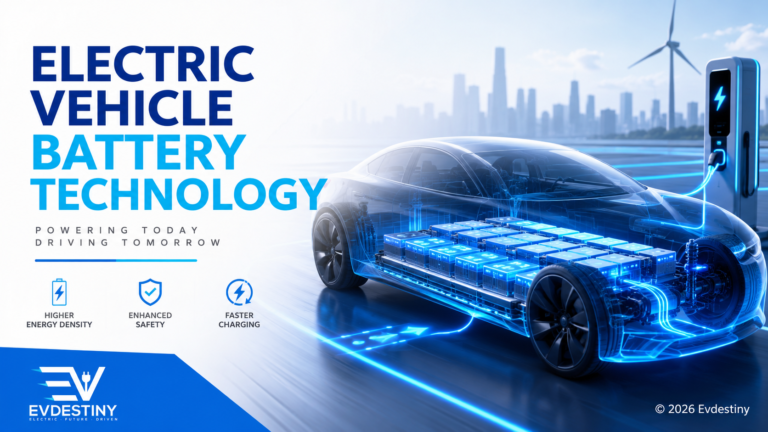
Battery innovation remains at the heart of the Future of Electric Vehicles. Improvements in battery technology directly influence vehicle range, charging speed, safety, and affordability. Researchers are working continuously to overcome existing limitations.
As battery technologies evolve, electric vehicles will become more attractive to a wider audience. Faster charging times, longer lifespans, and lower production costs will help accelerate global EV adoption.
Energy density refers to the amount of energy a battery can store within a given size and weight. Higher energy density allows vehicles to travel farther without increasing battery size.
This improvement benefits both consumers and manufacturers. Drivers enjoy longer ranges while manufacturers can design lighter and more efficient vehicles. These advancements will play a major role in the Future of Electric Vehicles.
Many experts believe solid-state batteries represent the next major breakthrough in battery technology. Unlike traditional lithium-ion batteries, solid-state designs use solid materials instead of liquid electrolytes.
This innovation offers several advantages. Charging times may decrease dramatically. Energy density could increase significantly. Safety may improve due to lower risks of overheating. These benefits could transform electric transportation on a global scale.
As EV adoption grows, battery recycling becomes increasingly important. Valuable materials such as lithium, nickel, and cobalt can be recovered and reused in new battery production.
A circular economy approach reduces waste while strengthening supply chains. It also helps reduce environmental impacts associated with raw material extraction. This strategy supports both economic and environmental sustainability goals.
Researchers are exploring alternative battery chemistries beyond conventional lithium-ion technology. Lithium iron phosphate batteries are gaining popularity because of their affordability and durability.
Sodium-ion batteries are also attracting attention due to the abundance of sodium resources worldwide. Combined with advanced Battery storage systems, these emerging technologies could significantly reduce production costs while supporting broader EV adoption.
| Technology | Main Advantage | Expected Impact |
|---|---|---|
| Lithium-Ion | Proven performance | Current industry leader |
| Solid-State | Faster charging and higher safety | Future premium EVs |
| LFP Batteries | Lower cost and long lifespan | Affordable mass-market EVs |
| Sodium-Ion | Abundant materials | Reduced supply chain risks |
| Advanced Recycling | Material recovery | Sustainable battery ecosystem |
“The future of transportation depends as much on battery innovation as it does on vehicle design.”
The evolution of batteries will determine how quickly electric vehicles become the dominant form of transportation worldwide. As technology advances, consumers can expect better performance, lower costs, improved reliability, and stronger sustainability outcomes. These developments are laying the foundation for the next chapter in the Future of Electric Vehicles, where electric mobility becomes accessible to people in every region of the world.
After five years, most EVs still perform well with only gradual battery capacity loss. Many electric vehicles retain around 80% or more battery capacity, depending on charging habits, climate, and usage.
Learn more about EV batteries from the U.S. Department of Energy Alternative Fuels Data Center.
The 80% rule means charging your EV battery up to around 80% for daily use can help reduce long-term battery stress. Full charging is still useful before long trips when extra range is needed.
The biggest EV challenges are charging availability, charging speed, battery costs, and limited access to home charging for some drivers. Expanding global charging networks is helping solve these issues.
Explore global EV growth trends at the International Energy Agency Global EV Outlook.
Future cars will become smarter, more connected, and more efficient with AI systems, autonomous driving features, and advanced battery technology. Many vehicles will also integrate with smart energy systems.
High-speed driving, extreme temperatures, heavy acceleration, and frequent heating or air conditioning use drain EV batteries the fastest. Smooth driving and efficient charging habits help extend range.
For more information about EV efficiency, visit U.S. Department of Energy Electric Vehicle Basics.